
Tbilisi · Then & Now
Rustaveli Avenue: Tbilisi Then & Now
The avenue at the heart of Tbilisi has worn many names and many faces. Here it is across a hundred years — earth road to boulevard — in real photographs, each pinned to the exact spot it was taken.
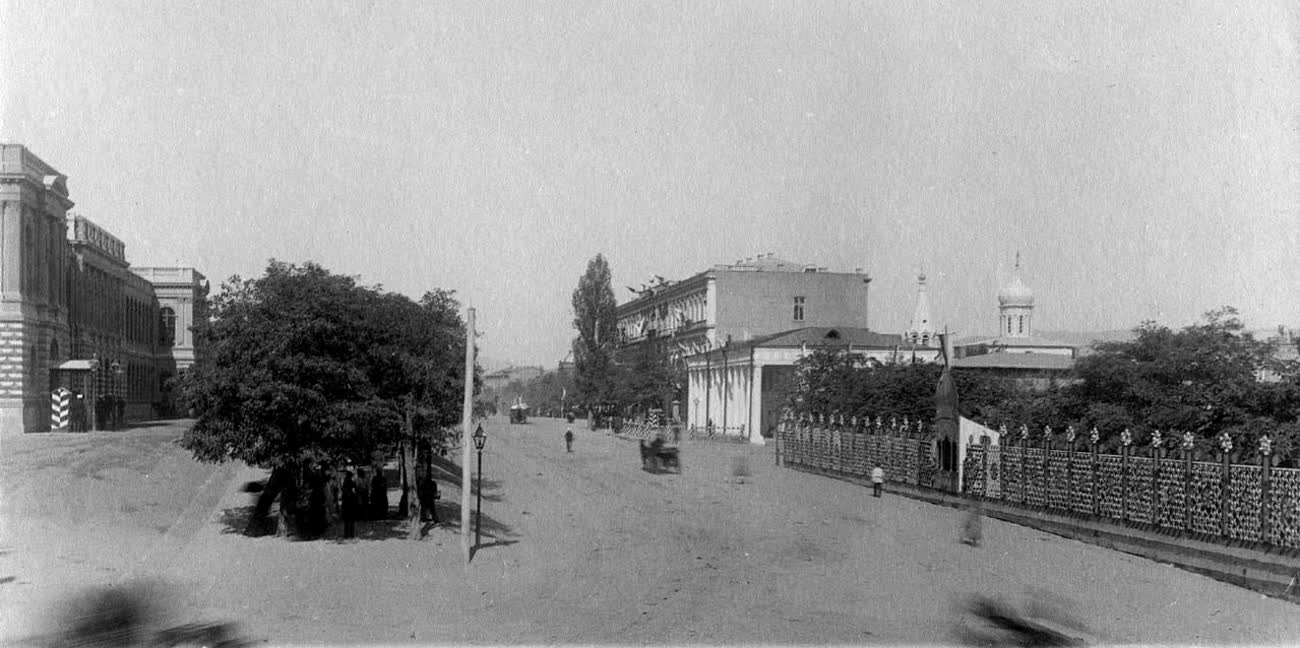
It began as Golovin Avenue
Before 1918 this street was Golovin Avenue, named after a Russian viceroy of the Caucasus. In the 1880s it was still a broad ribbon of packed earth, lined with young trees and the occasional horse-drawn carriage — grand in ambition, dusty in fact.
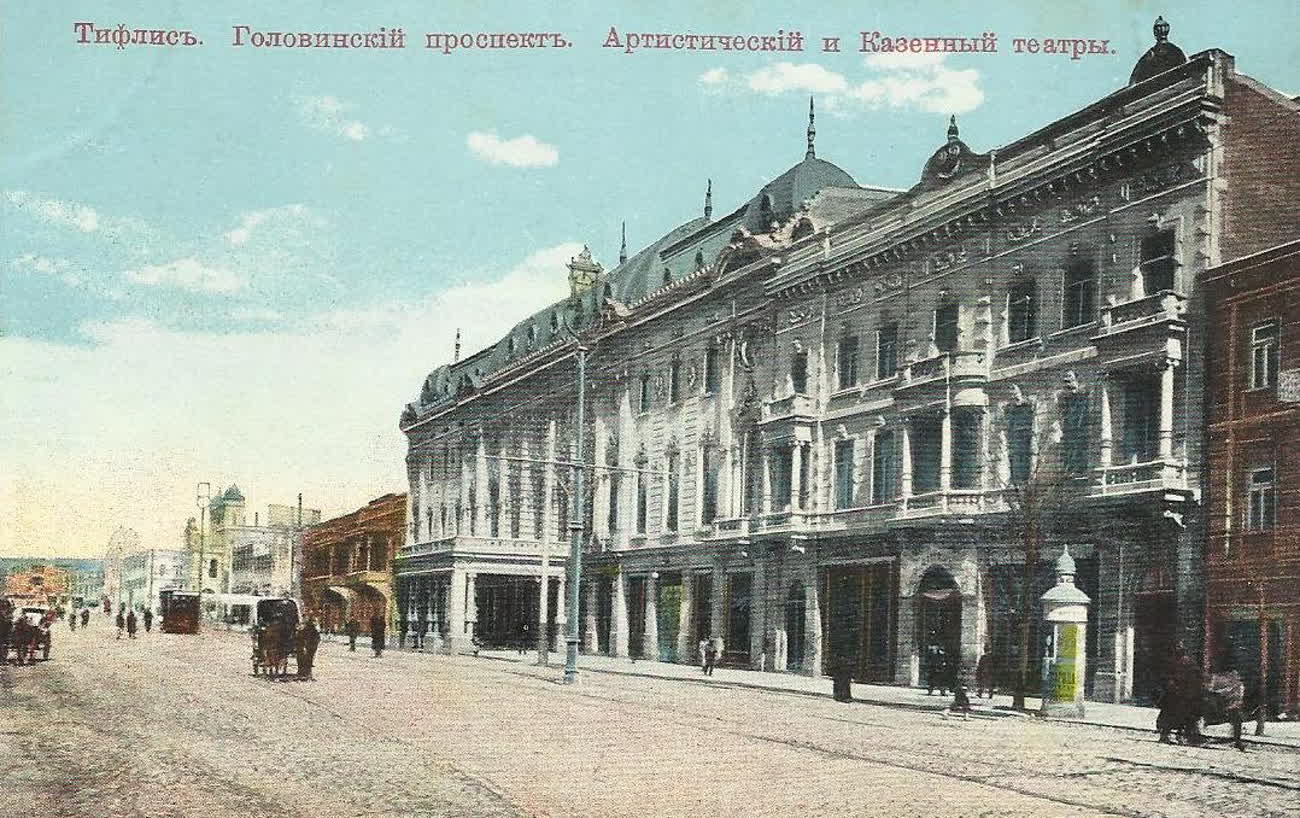
The avenue of theatres
By 1904 the street had filled in with ornate facades. This hand-tinted postcard shows the Artistic and State (Kazyonny) theatres, their balconies and cornices piled up over the pavement, with a tram already running down the middle. This was the avenue at its imperial peak.
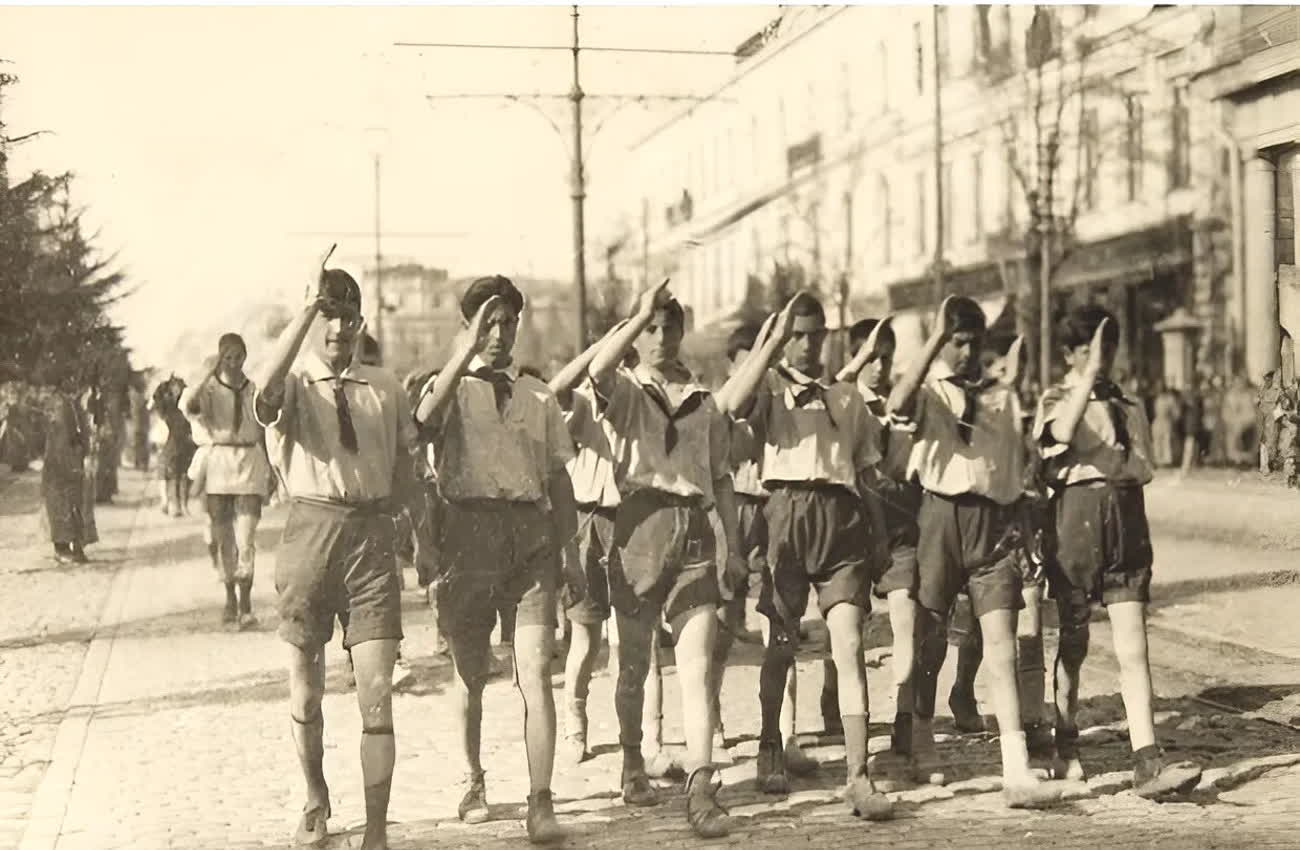
A new name, a new order
In 1918 the avenue was renamed for Shota Rustaveli, the medieval Georgian poet. Soviet rule arrived soon after, and the street became a stage for it — parades, demonstrations, and columns of Young Pioneers marching down the boulevard in their neckerchiefs.
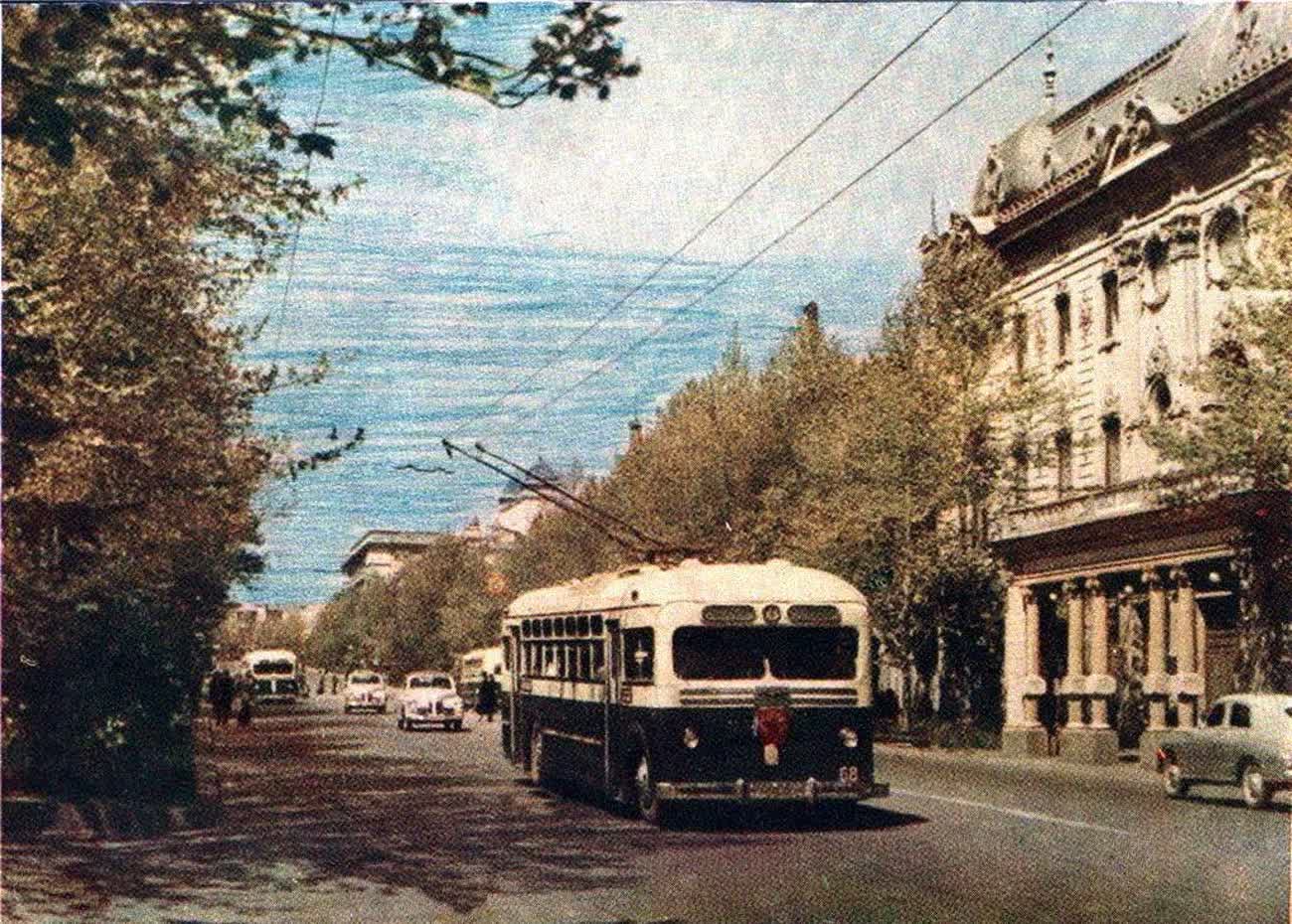
Trolleybuses and plane trees
By the mid-1950s the earth was long gone, paved over for trolleybuses that hummed beneath the plane trees. In colour the avenue looks almost modern — the same grand facades on the right, now shading a very different street.
Landmarks on the skyline
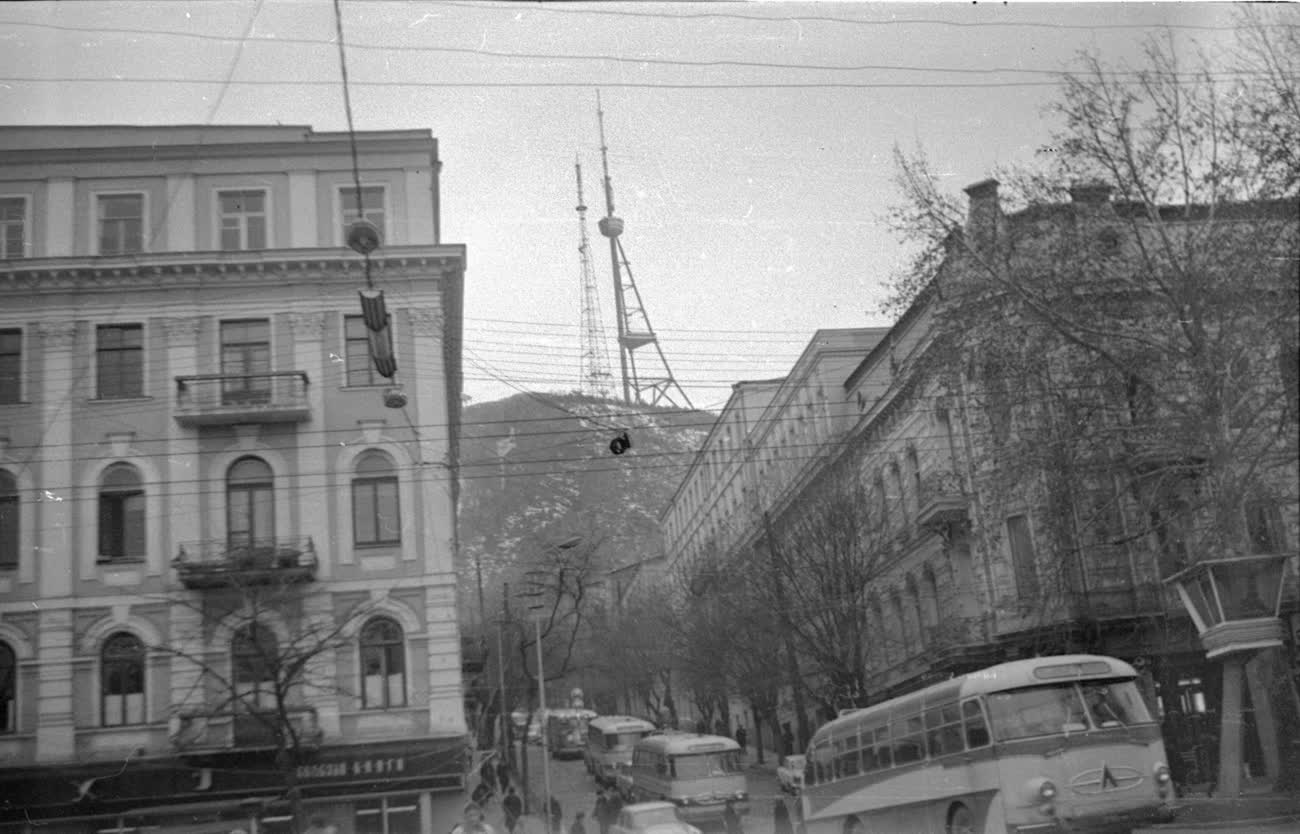
Look down the avenue in 1972 and a new landmark rises behind it: the TV tower on Mtatsminda, the mountain that hangs over the city. Buses crowd the junction with Chavchavadze; the street is busy, modern, unmistakably the same avenue — only aged another lifetime.
Stand on the same spot
The hard part with an old photograph is always finding where the photographer stood. That's what Time Portal is for: every historical photo is pinned to the precise spot it was taken. Open Rustaveli Avenue on the map, drag the year back toward 1888, and watch the boulevard peel away frame by frame — then walk there and see it for yourself.
Explore Tbilisi's past on the map.
The rest of Tbilisi, decade by decade and place by place: about 9,400 old photographs of Tbilisi.
More Tbilisi stories are on the way — vanished buildings and the city in the 1900s.