
Moscow · Then & Now
The Cathedral of Christ the Saviour: Moscow Then & Now
Moscow's grandest cathedral stood for less than fifty years before it was blown to rubble. For thirty-five years there was a swimming pool where the altar had been. Then, in the 1990s, it was built again — from nothing. Here is one spot across a century, in real photographs, each pinned to the exact place it was taken.
The largest church in Russia
The Cathedral of Christ the Saviour was raised over four decades to thank God for driving Napoleon out of Russia — a mountain of white marble and gold domes on the bank of the Moskva, finished in 1883 and the tallest Orthodox church in the world. Here it is around 1912, a monument to Tsar Alexander III standing at its foot.
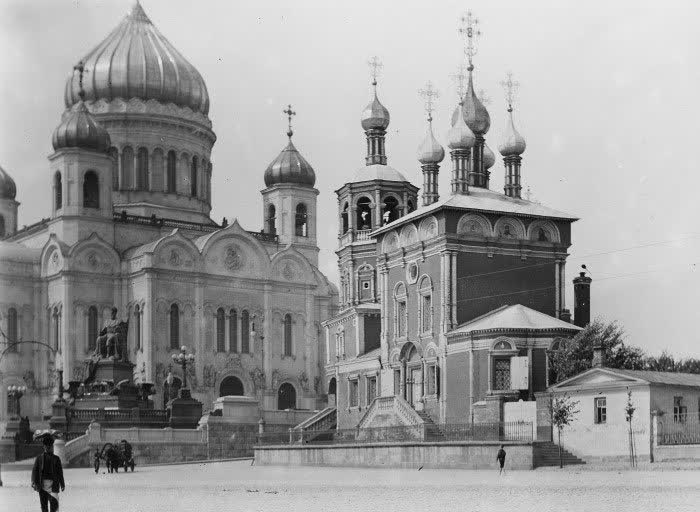
A landmark of the city
For a generation it anchored this bend of the river, ringed by formal gardens. This view was taken in 1930 from the German airship Graf Zeppelin as it passed over Moscow — the cathedral white at the centre of the frame, the whole city arranged around it. Within two years it would be gone.
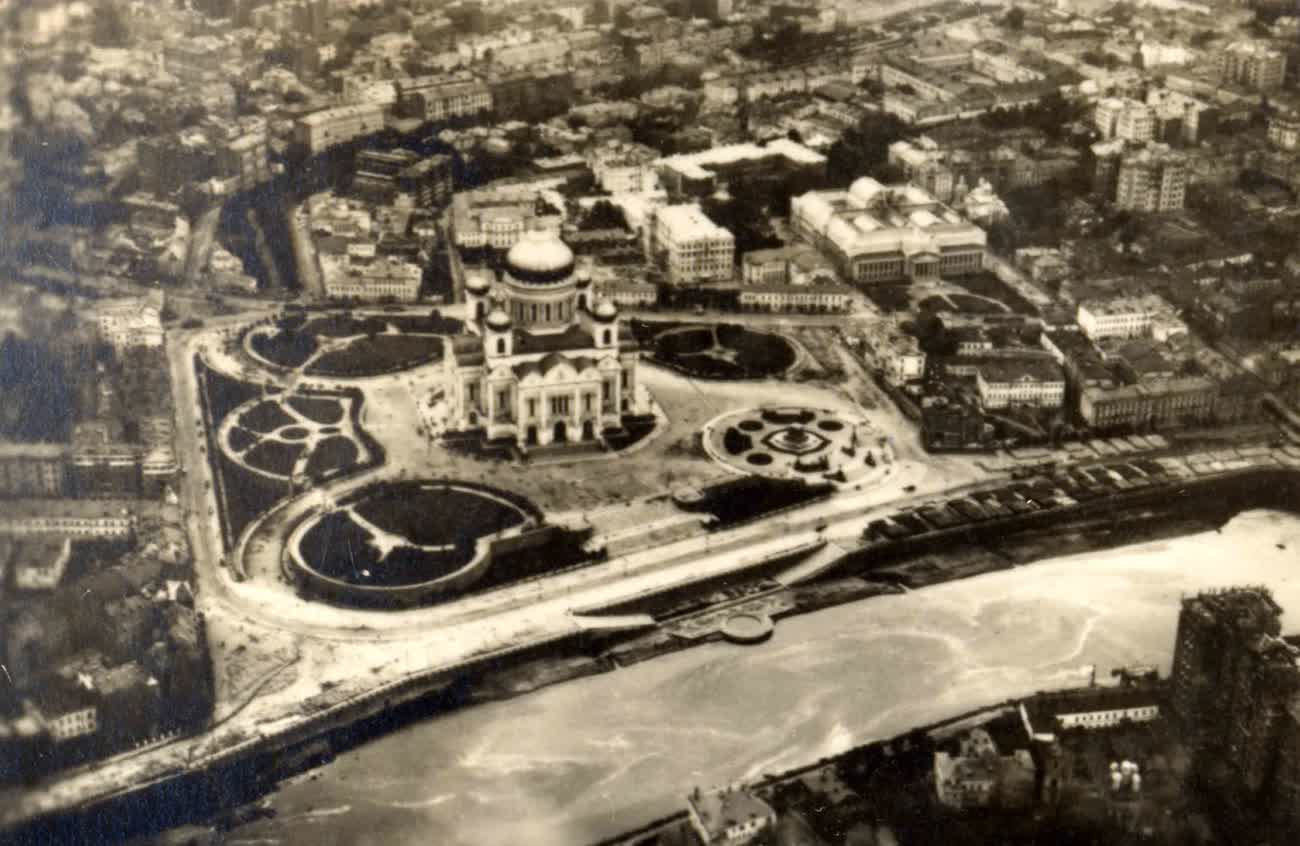
Taking it apart
Stalin's government wanted the site for a Palace of the Soviets — a colossal tower to be crowned with a statue of Lenin taller than the Statue of Liberty. First the cathedral was stripped. Here, in 1931, workmen dismantle a painting from one of its arches, the interior coming down piece by piece.
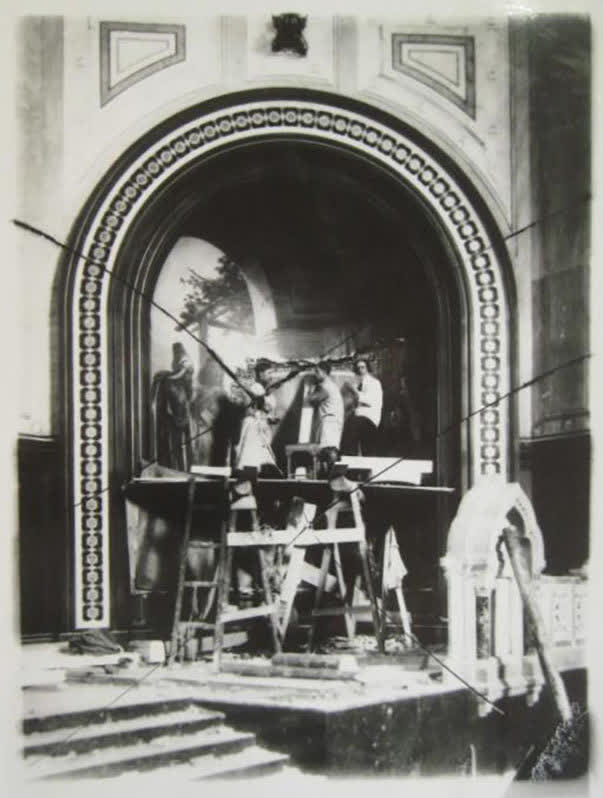
December 1931
On 5 December 1931 the cathedral was dynamited, and it took more than a year to cart the marble away. This is what was left that winter — a single broken fragment standing over a mountain of rubble in the snow, a few figures for scale. The largest church in Russia had been reduced to a quarry.
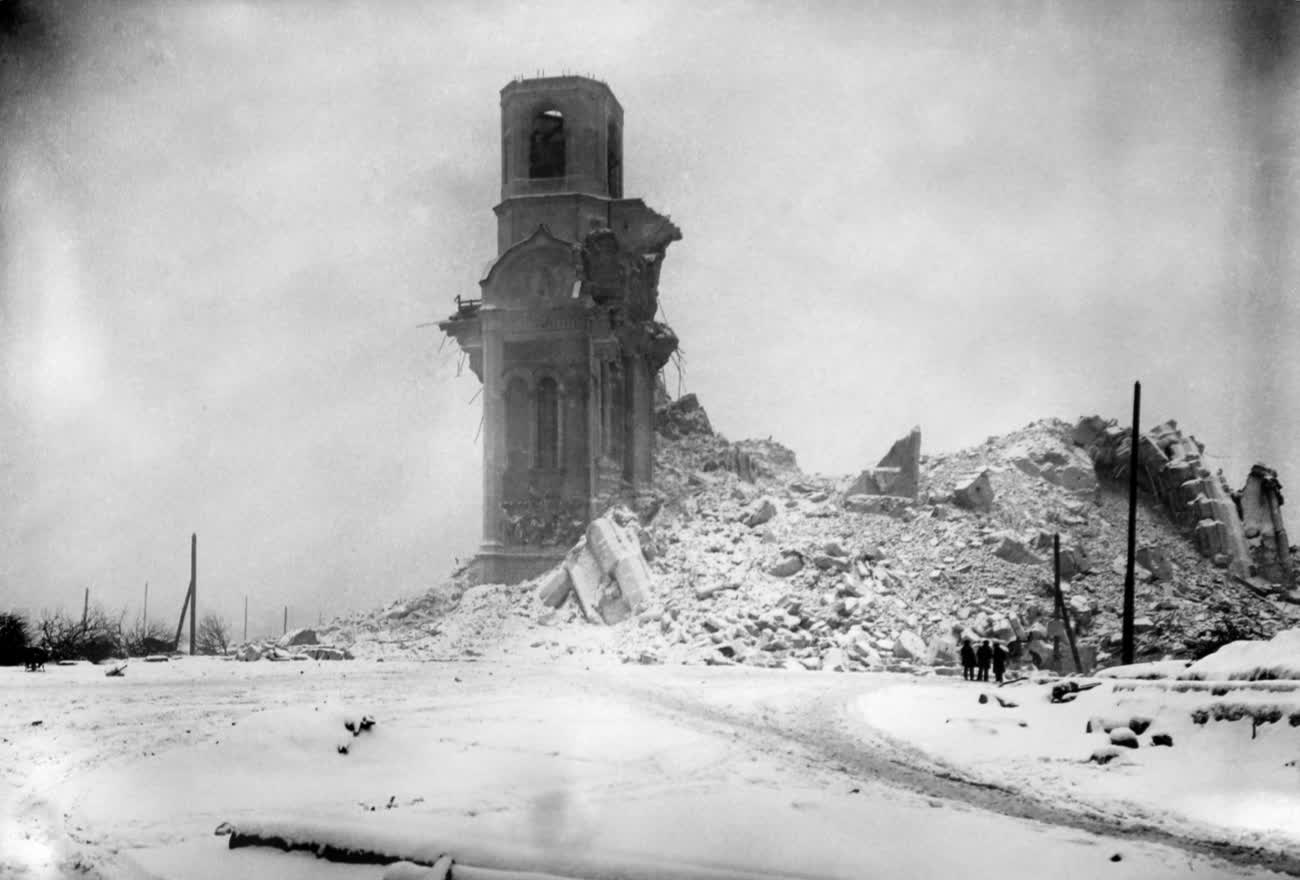
Sixty years, and then a second cathedral
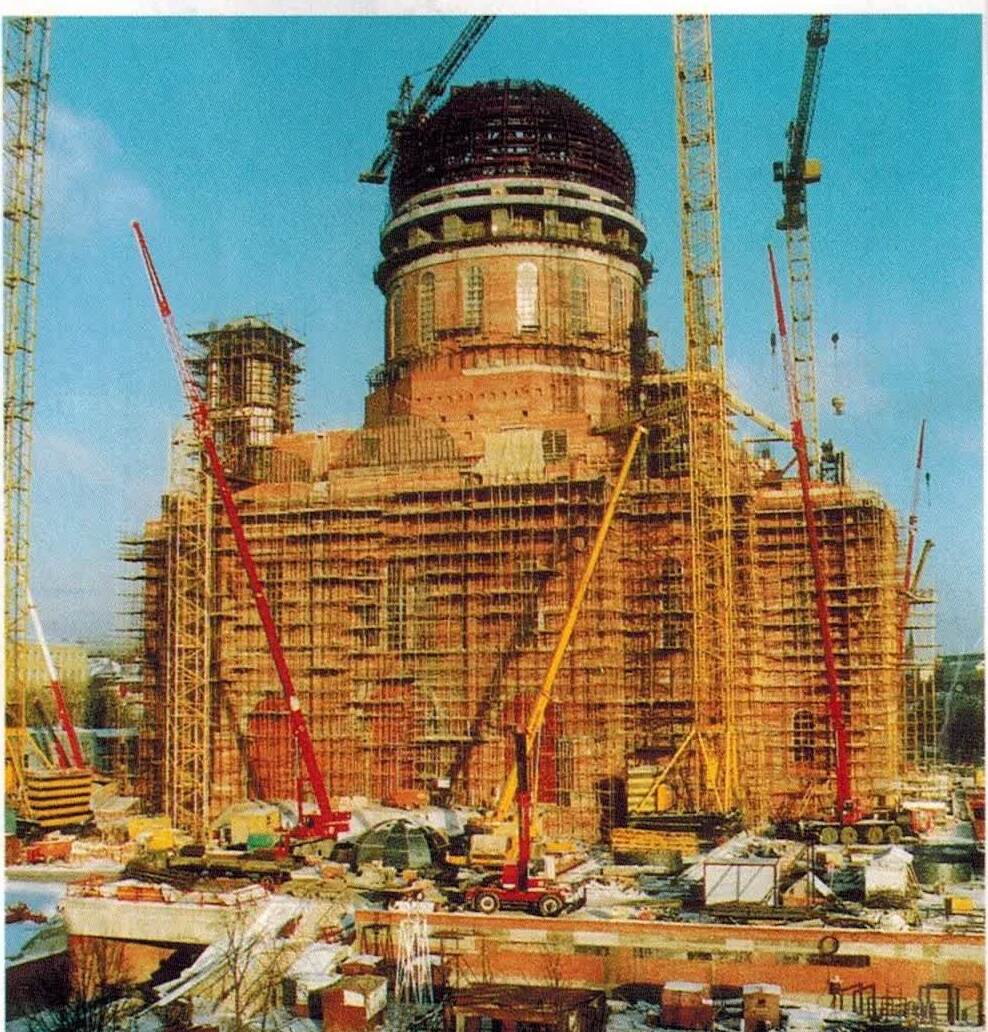
The Palace of the Soviets was never built; its flooded foundations sat for years, and from 1960 the site became the Moskva Pool — the largest open-air swimming pool in the world, steaming through the winter where the altar had once stood. Then the Soviet Union fell, and Moscow decided to build the cathedral all over again. By December 1995 it was rising from the same ground, a forest of cranes around a familiar shape.
Back where it was
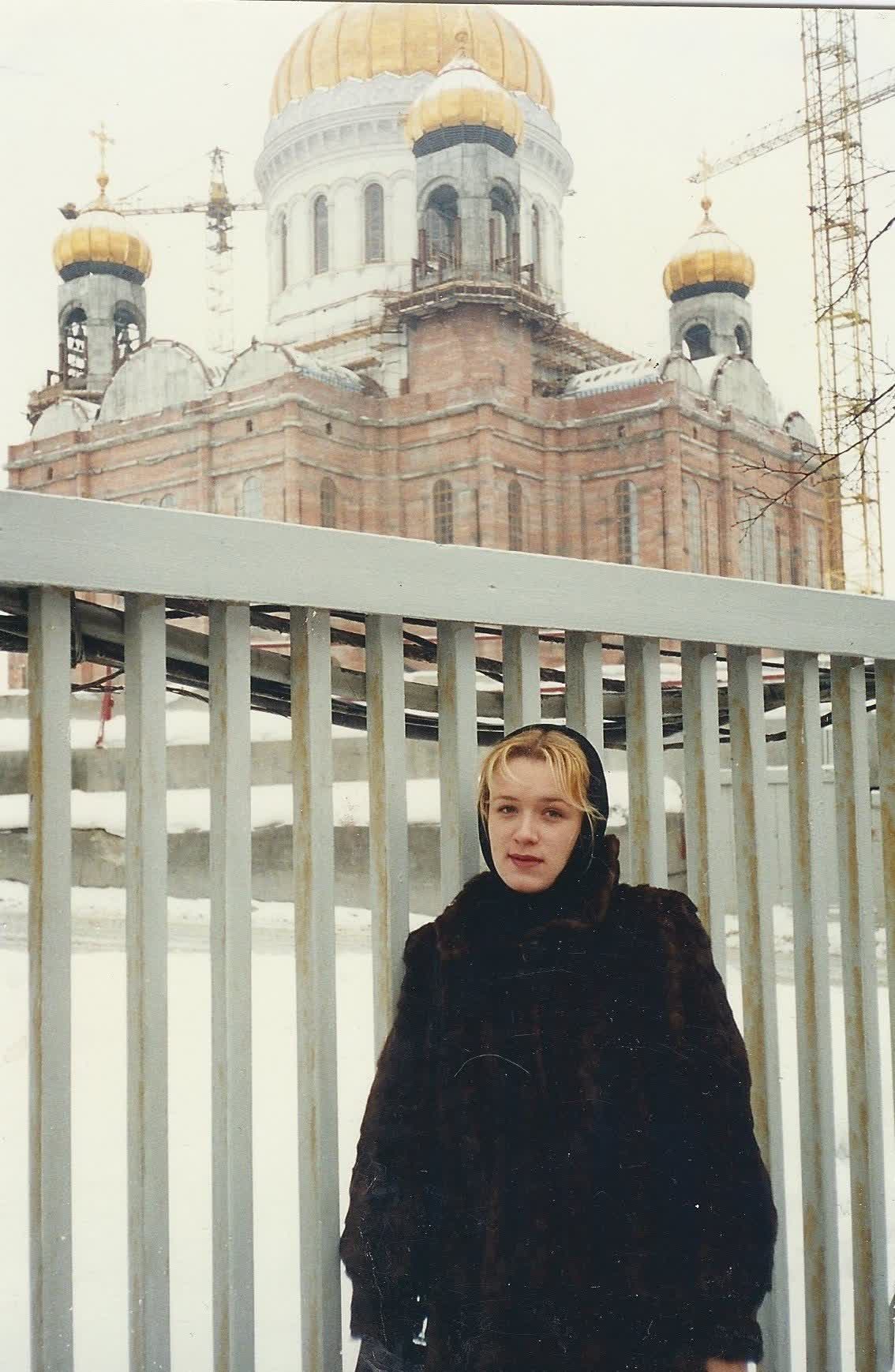
Within a few years the shape was whole again — the same white walls, the same gold domes, on the exact spot that had been cleared sixty years before. Here it is in 1996, the domes back in place, an ordinary passer-by in the snow before it. A building erased from the city had simply returned.
Stand on the same spot
Today the Cathedral of Christ the Saviour stands again beside the Moskva, as if it had never left — though within living memory people swam in a heated pool where its altar now stands. The hardest thing about an old photograph is standing where the photographer stood and seeing what they saw. That's what Time Portal is for: every historical photo is pinned to the precise spot it was taken. Stand on the embankment, open the map, and drag the year back — watch the cathedral fall, the pool appear, and the white walls rise again.
Explore Moscow's past on the map.
The rest of Moscow, decade by decade and place by place: about 303,000 old photographs of Moscow.
More then & now stories: the Brandenburg Gate in Berlin and the Eiffel Tower in Paris.