
Paris · Then & Now
The Eiffel Tower: Paris Then & Now
The Eiffel Tower was only ever meant to stand for twenty years. It has now watched over Paris for more than a century — while the wonders built around it came and went. Here is the tower across its long life, in real photographs, each pinned to the exact spot it was taken.
A tower that shouldn't have lasted
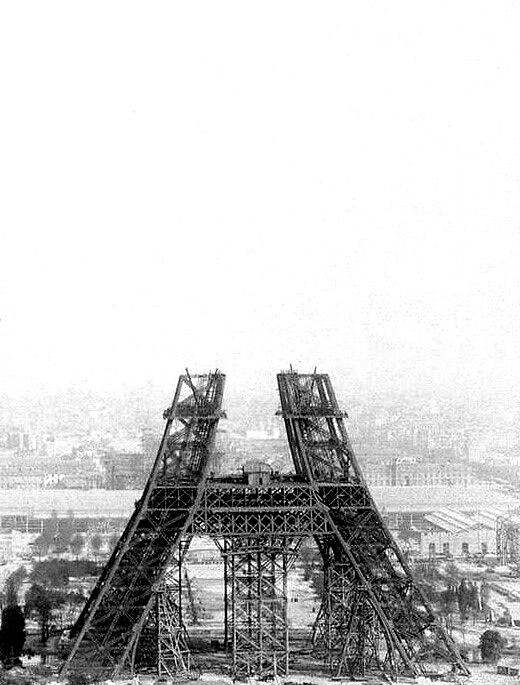
In 1888 it was still a strange iron skeleton climbing out of the Champ de Mars — Gustave Eiffel's tower for the coming World's Fair, built to stand for just twenty years and then come down. Three hundred artists and writers signed a letter calling it a monstrous eyesore. Here it has reached only a fraction of its final height.
The star of the fair
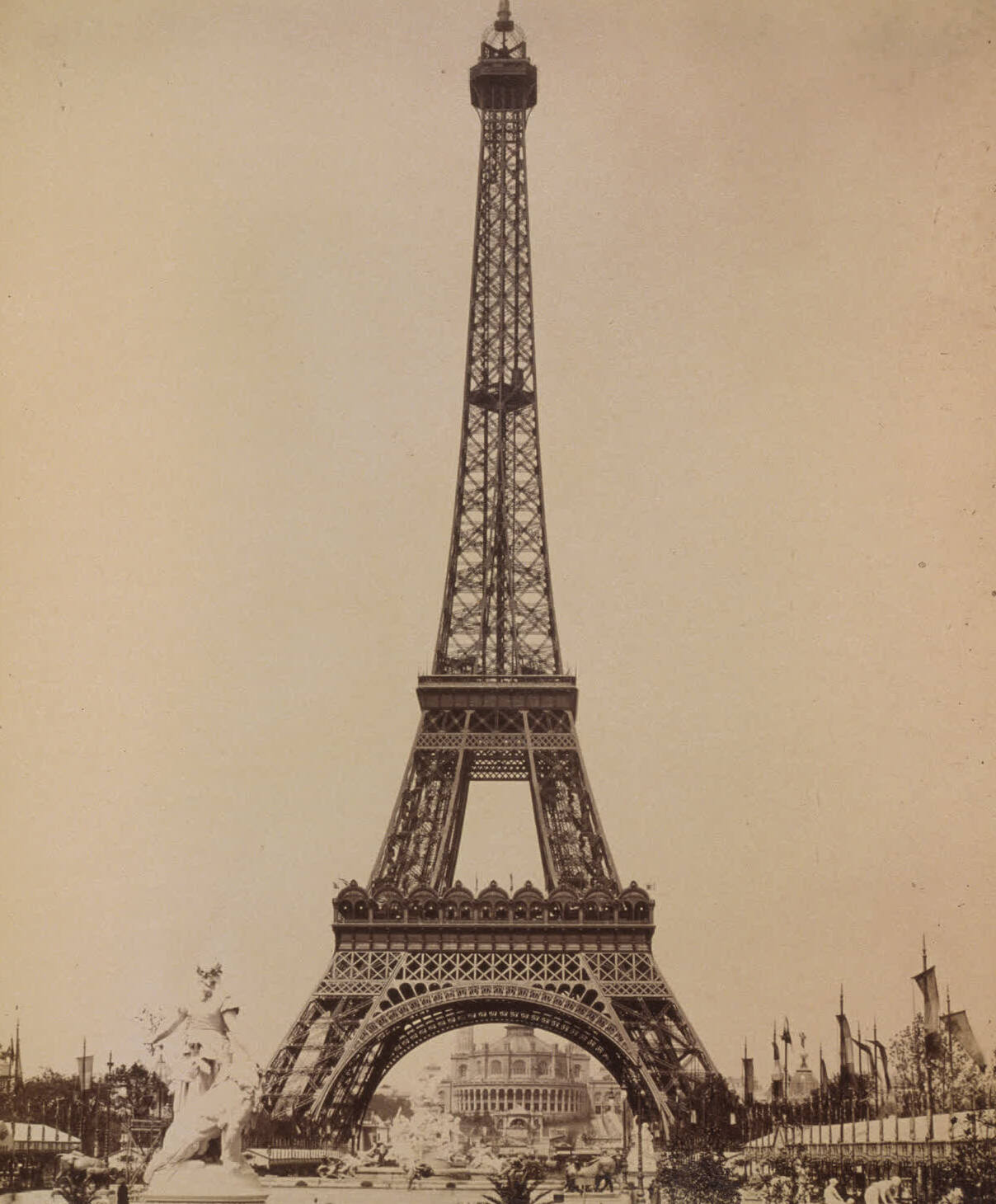
A year later it was finished — 300 metres of iron, the tallest structure on earth, the glittering entrance arch to the 1889 Exposition Universelle. Some two million people climbed it that summer. The eyesore had become the most photographed thing in Paris almost overnight.
The world came back
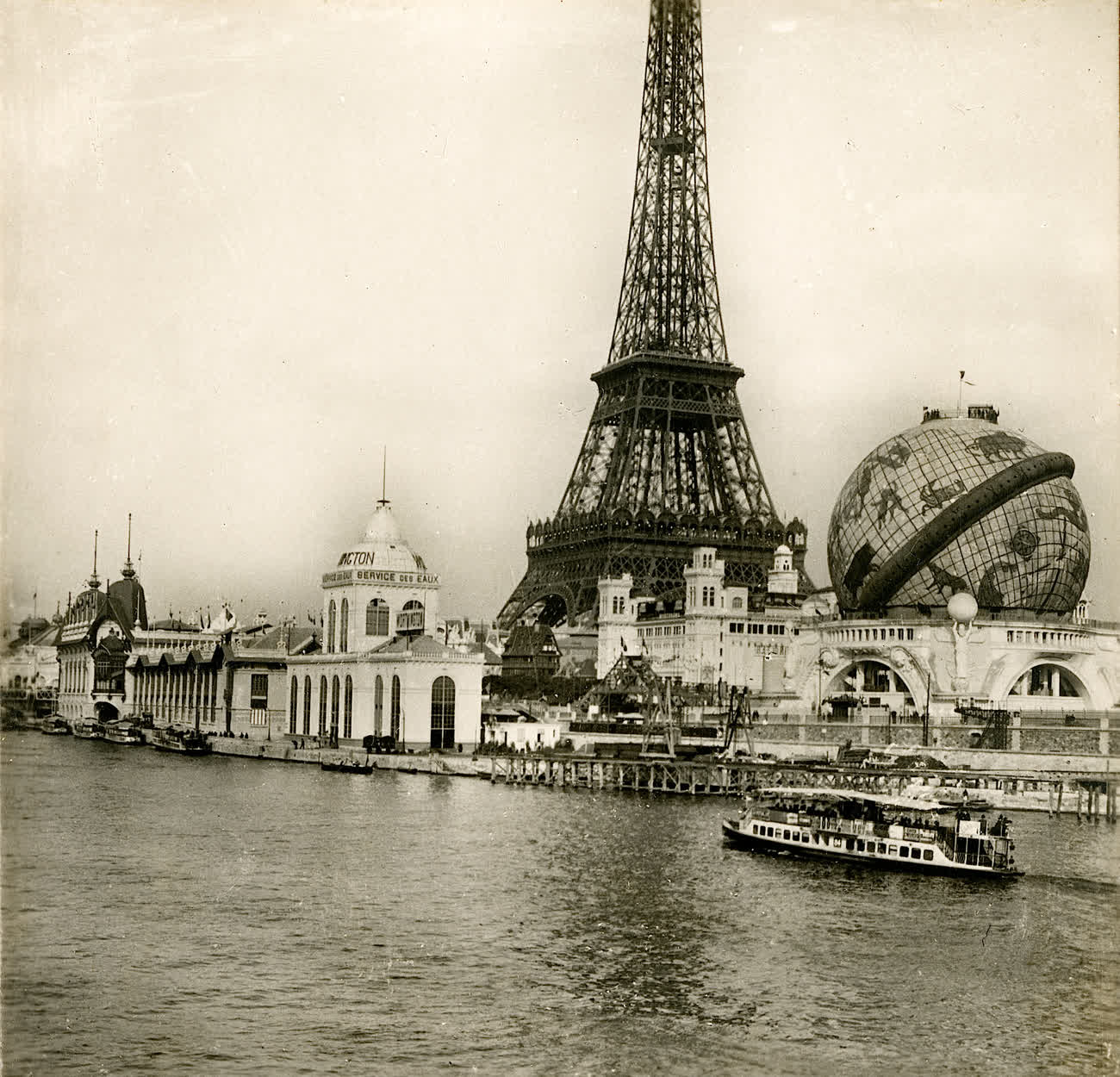
For the Exposition of 1900 the fair returned, and the tower — freshly repainted for the new century — stood beside wonders that would not outlast it. Here it rises over the Globe Céleste, a vast painted planet you could walk inside, while a moving sidewalk carried crowds along the Seine. The globe was pulled down as soon as the fair closed.
The palace across the river
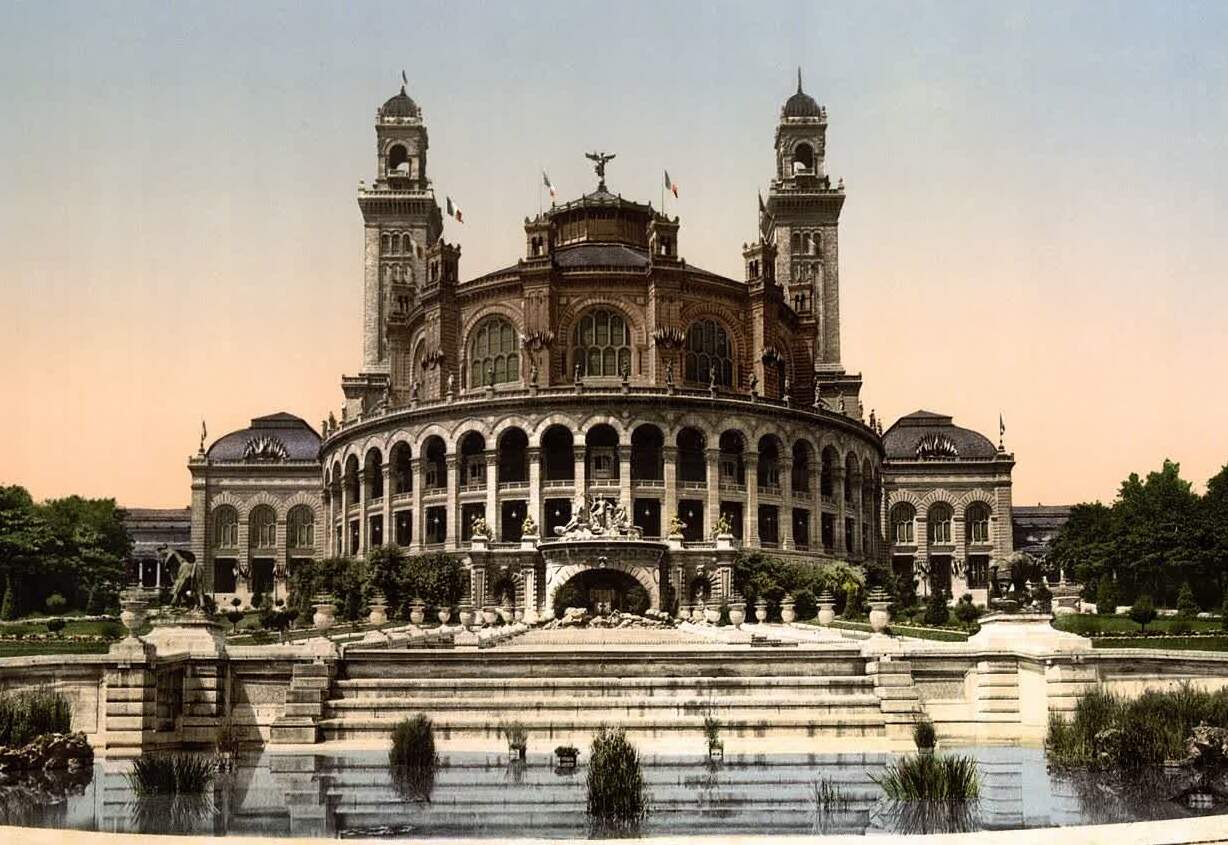
On the hill facing the tower stood the Palais du Trocadéro, a Moorish-Byzantine fantasy of domes, minarets and cascading fountains, built for an earlier fair. It looked permanent in a way the iron tower never did. Yet it was the palace that vanished — demolished in 1937 — while the tower it faced still stands.
A prize at the top
By 1901 the tower had become the finish line for a new age. That October Alberto Santos-Dumont steered his cigar-shaped airship out from Saint-Cloud, rounded the tower, and flew back in under half an hour to win a famous aviation prize. Crowds packed the quays to watch a man fly a machine around the top of the tallest tower in the world.
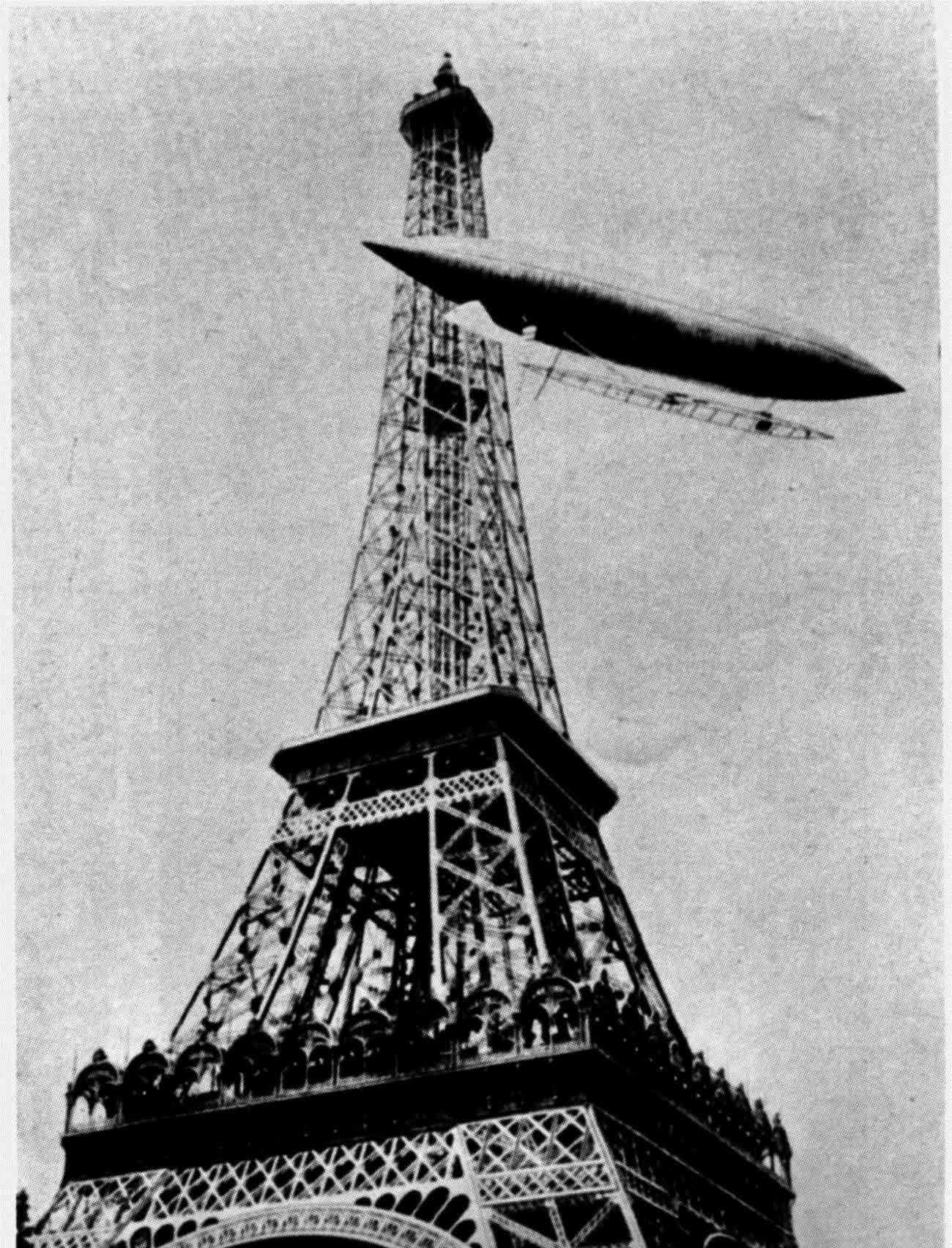
Still here
The twenty-year permit came and went; the tower was kept because its antennas were too useful to lose, and it simply never left. Here it is in 1960 from the Champ de Mars, unchanged, with the Palais de Chaillot — the building that replaced the vanished Trocadéro — framed in its arch. The temporary thing had outlasted almost everything built to dazzle beside it.
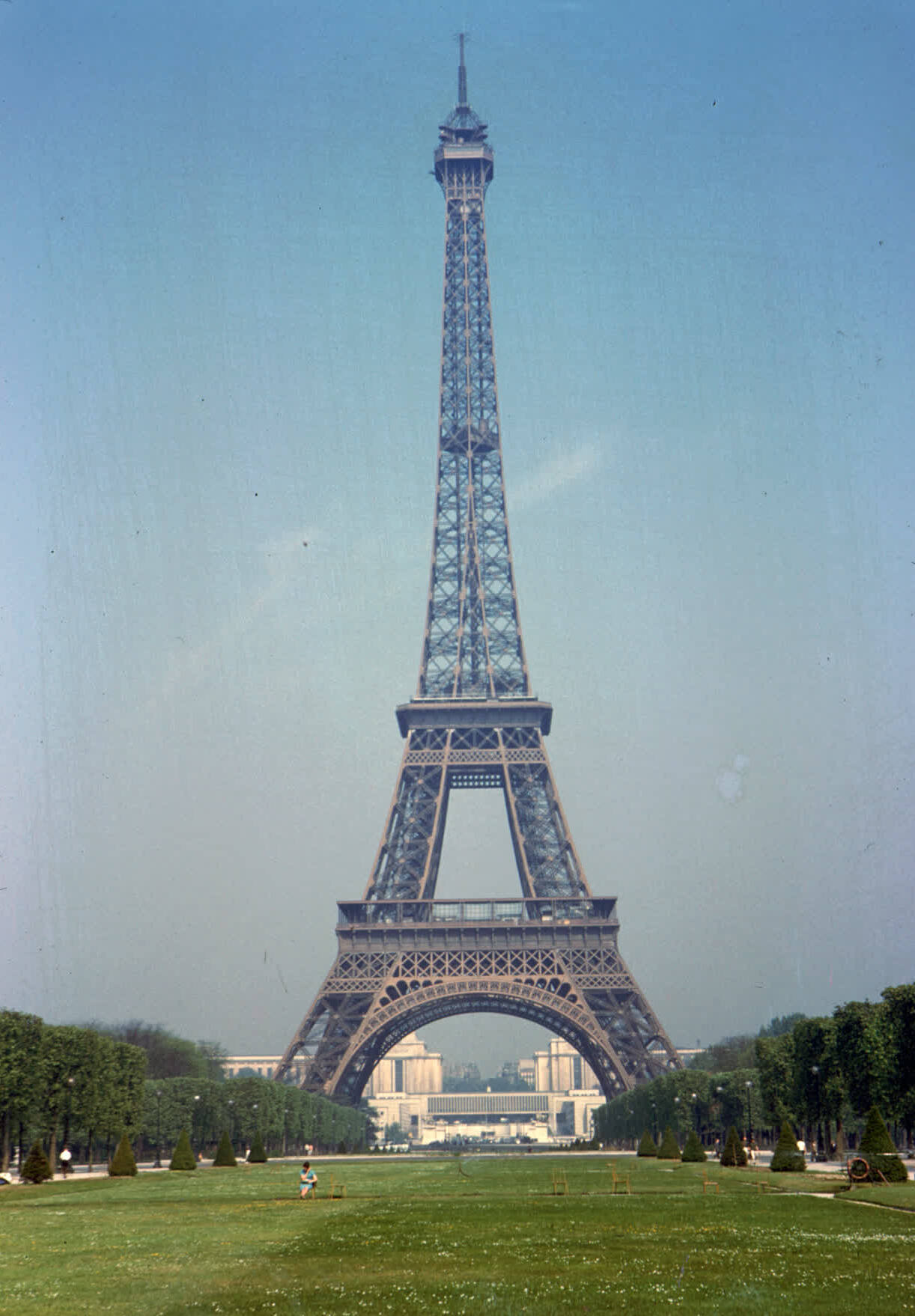
Stand on the same spot
More than a century after it was meant to be scrapped, the Eiffel Tower is the most-visited paid monument on earth — repainted by hand every few years, the one fixed point while fairs, globes and palaces rose and fell around it. The hardest thing about an old photograph is standing where the photographer stood and seeing what they saw. That's what Time Portal is for: every historical photo is pinned to the precise spot it was taken. Stand on the Champ de Mars, open the map, and drag the year back — watch the crowds, the globe, and the scaffolding of 1888 appear around the tower.
Explore Paris's past on the map.
The rest of Paris, decade by decade and place by place: about 27,000 old photographs of Paris.
More then & now stories: the Twin Towers of New York and the Brandenburg Gate in Berlin.