
Old photos · Finland
Old photos of Helsinki
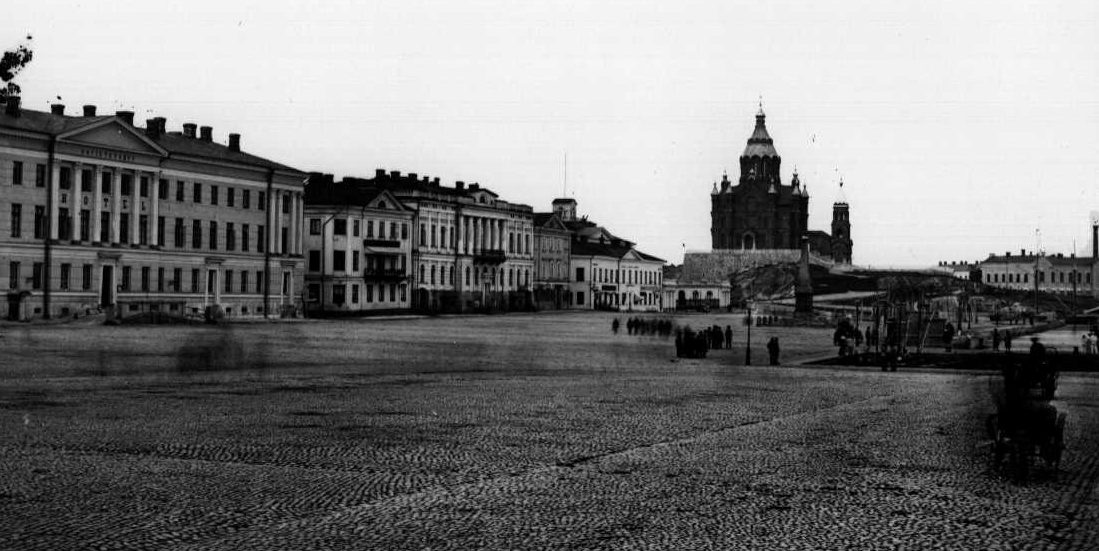
Helsinki's photographs gather around two times — the city of the 1900s, the last years of the Grand Duchy, and the 1970s, its busiest decade — and many are titled by street and house number, so they can be matched door by door.
Time Portal's archive holds about 3,700 photographs of Helsinki (Helsingfors), taken between 1860 and 2000, each pinned to the spot where the photographer stood. 49% of them date from 1955 or later and are free to browse at map.timeportal.app with no account; the older ones open with Pro. The oldest, dated 1860 in the archive, shows the view from Kalliolinna.
- Photographs
- 3,700
- Oldest
- 1860
- Busiest decade
- 1970s
- Free, 1955 on
- 49%
How many photographs, decade by decade
The busiest decades for Helsinki are the 1970s and the 1900s — 793 and 457 photographs. 150 were taken before 1900. Everything from 1955 onward is free to open on the map; the older photographs are part of Pro.
| Decade | Relative size | Photographs |
|---|---|---|
| before 1860 | 0 | |
| 1860s | 17 | |
| 1870s | 5 | |
| 1880s | 15 | |
| 1890s | 113 | |
| 1900s | 457 | |
| 1910s | 350 | |
| 1920s | 313 | |
| 1930s | 251 | |
| 1940s | 284 | |
| 1950s | 214 | |
| 1960s | 268 | |
| 1970s | 793 | |
| 1980s | 243 | |
| 1990s | 401 |
Where the photographs were taken
Counted in a small square around each place — about 200 metres each way — so a number is every photograph taken there, of the place itself or of the street beside it. Each place opens the map on that spot.
| Place | Photos | Oldest |
|---|---|---|
| Senate Square and the Cathedral | 344 | 1869–1871 |
| Market Square and the South Harbour | 255 | 1869–1872 |
| The Esplanadi | 497 | 1885 |
| The Railway Station | 457 | 1883 |
| Uspenski Cathedral | 57 | 1868 |
| Aleksanterinkatu | 314 | 1890 |
What changed
Helsinki was made the capital of the Grand Duchy of Finland, under Russian rule, in 1812, and its centre was rebuilt to Carl Ludvig Engel's plans: the Senate Square, with the Senate, the university and the white cathedral of St Nicholas, finished in 1852, is his. The red-brick Uspenski Cathedral above the harbour followed in 1868.
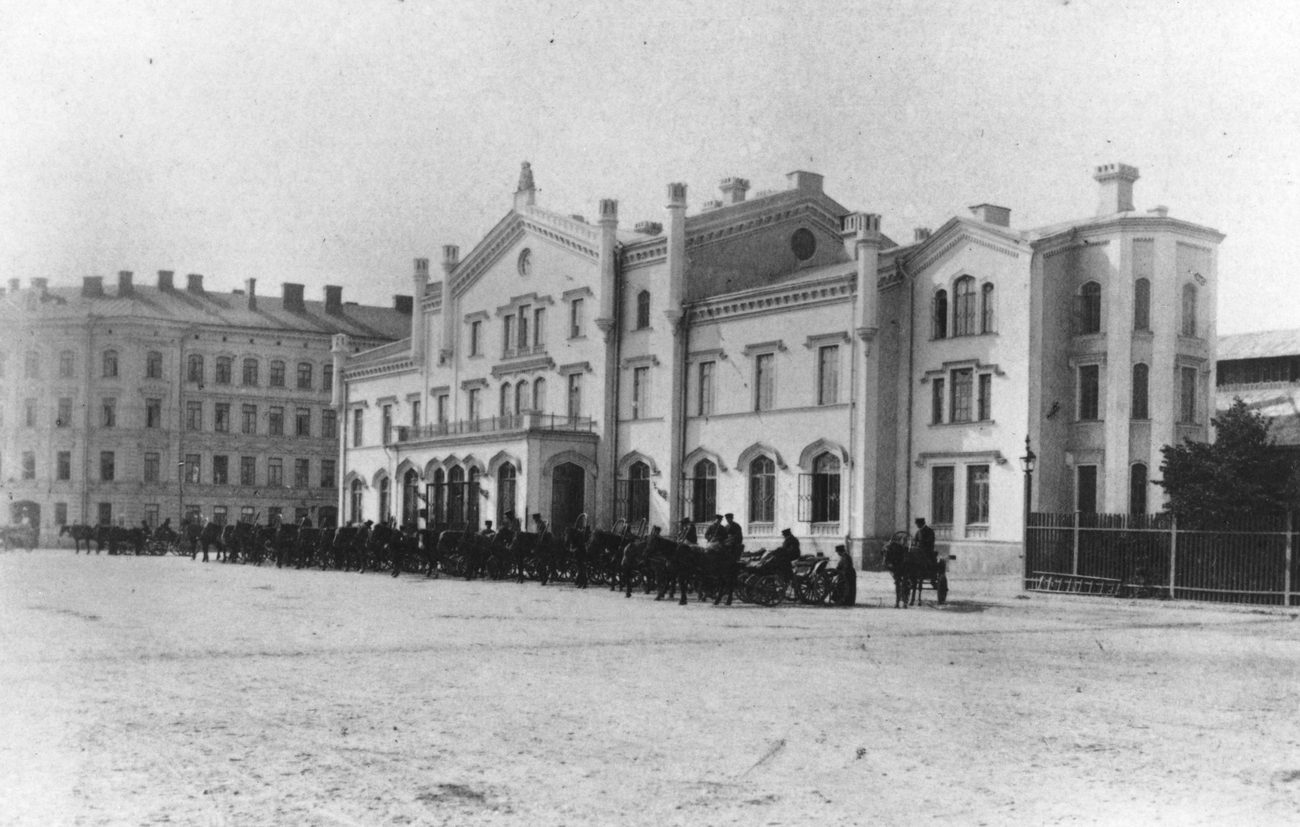
Finland declared its independence in December 1917. The railway station in the photographs of the 1880s is the old one; Eliel Saarinen's granite station replaced it and opened in 1919. Helsinki was bombed heavily in February 1944, but its centre came through the war largely standing.
Questions about old photos of Helsinki
Where can I see old photos of Helsinki on a map?
On Time Portal: about 3,700 photographs of Helsinki, each pinned where it was taken, most with the direction the camera faced. The map is free in any browser at map.timeportal.app — photographs from 1955 on need no account — and there is an app for iPhone and iPad.
What is the oldest photograph of Helsinki in the archive?
The oldest precisely dated photograph, from 1860, shows the view from Kalliolinna. 150 of the Helsinki photographs were taken before 1900.
Which years of Helsinki are best covered?
The 1970s, with 793 photographs, and the 1900s, with 457. 49% of the Helsinki photographs date from 1955 or later.
Open Helsinki on the map
Other cities: Moscow, Saint Petersburg, Kyiv, New York, Berlin, Paris, Amsterdam, Nizhny Novgorod, Prague, Yekaterinburg, Kazan, Stockholm, Vyborg, Kaliningrad, Tbilisi, Tashkent, Odesa, Samarkand, Riga, Rome, Minsk, London, Volgograd, Tallinn, Copenhagen, Budapest, Vilnius, Vienna, Warsaw. Or search any address on the map, or in the app.
The counts on this page are free to reuse under CC BY 4.0 — credit Time Portal and link here. The photographs are not ours to license: they belong to their photographers and the archives that keep them.