
Old photos · Lithuania
Old photos of Vilnius
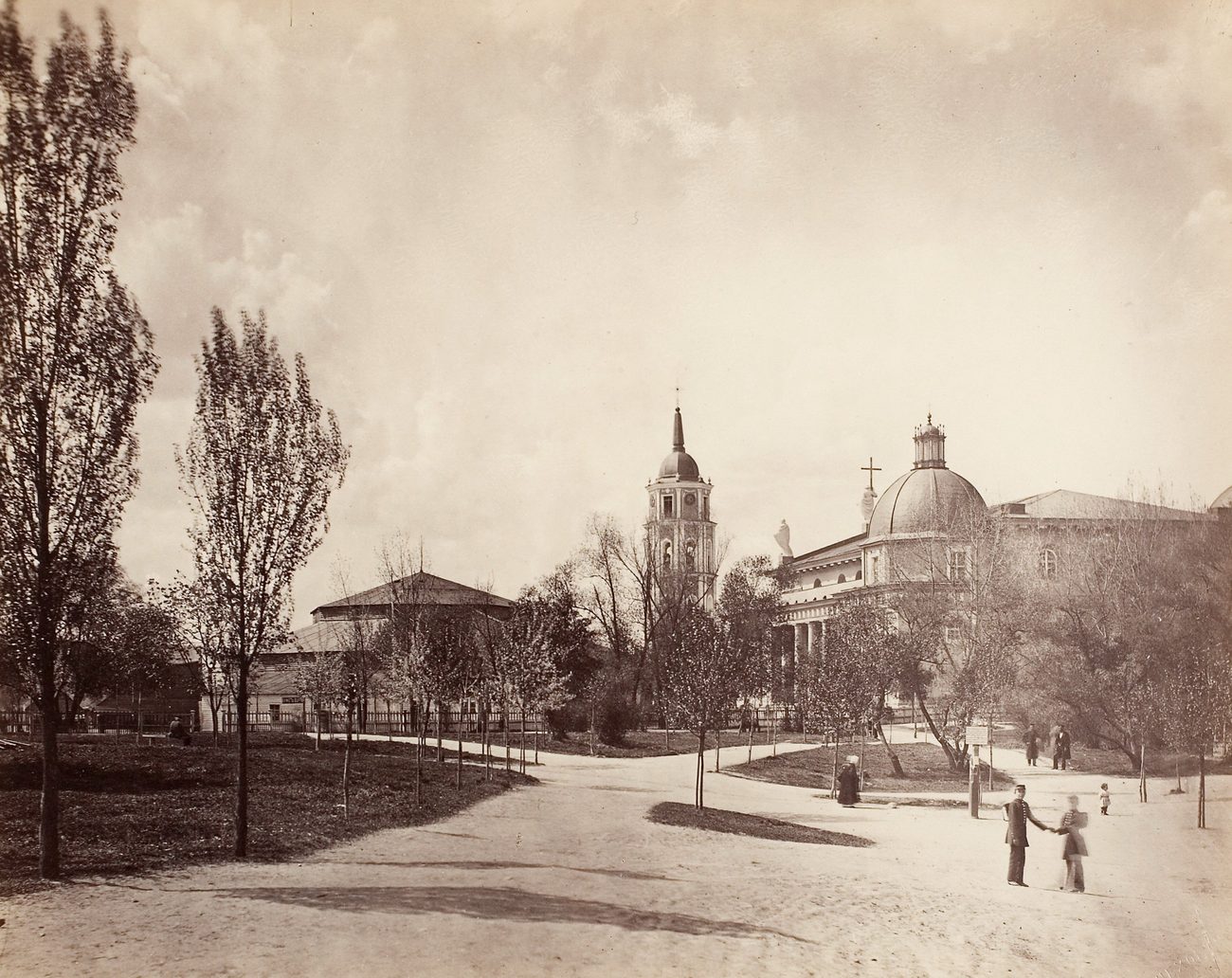
Vilnius was Vilna, Wilno and Vilnius within one lifetime, and its photographs are titled in Russian, Polish and Lithuanian — though more than half of them are from the 1960s to the 1980s.
Time Portal's archive holds about 4,300 photographs of Vilnius (Wilno, Vilna), taken between 1860 and 2000, each pinned to the spot where the photographer stood. 62% of them date from 1955 or later and are free to browse at map.timeportal.app with no account; the older ones open with Pro. The oldest, dated 1860 in the archive, shows a panorama of the city from the Šnipiškės suburb across the river.
- Photographs
- 4,300
- Oldest
- 1860
- Busiest decade
- 1970s
- Free, 1955 on
- 62%
How many photographs, decade by decade
The busiest decades for Vilnius are the 1970s and the 1980s — 1,061 and 1,011 photographs. 171 were taken before 1900. Everything from 1955 onward is free to open on the map; the older photographs are part of Pro.
| Decade | Relative size | Photographs |
|---|---|---|
| before 1860 | 1 | |
| 1860s | 26 | |
| 1870s | 80 | |
| 1880s | 20 | |
| 1890s | 44 | |
| 1900s | 101 | |
| 1910s | 265 | |
| 1920s | 141 | |
| 1930s | 410 | |
| 1940s | 428 | |
| 1950s | 221 | |
| 1960s | 383 | |
| 1970s | 1,061 | |
| 1980s | 1,011 | |
| 1990s | 125 |
Where the photographs were taken
Counted in a small square around each place — about 200 metres each way — so a number is every photograph taken there, of the place itself or of the street beside it. Each place opens the map on that spot.
| Place | Photos | Oldest |
|---|---|---|
| Cathedral Square and Gediminas' Tower | 541 | 1873 |
| Gediminas Avenue | 203 | 1884 |
| The Gate of Dawn and the Holy Spirit Monastery | 194 | 1870–1874 |
| The old Jewish quarter | 305 | 1900 |
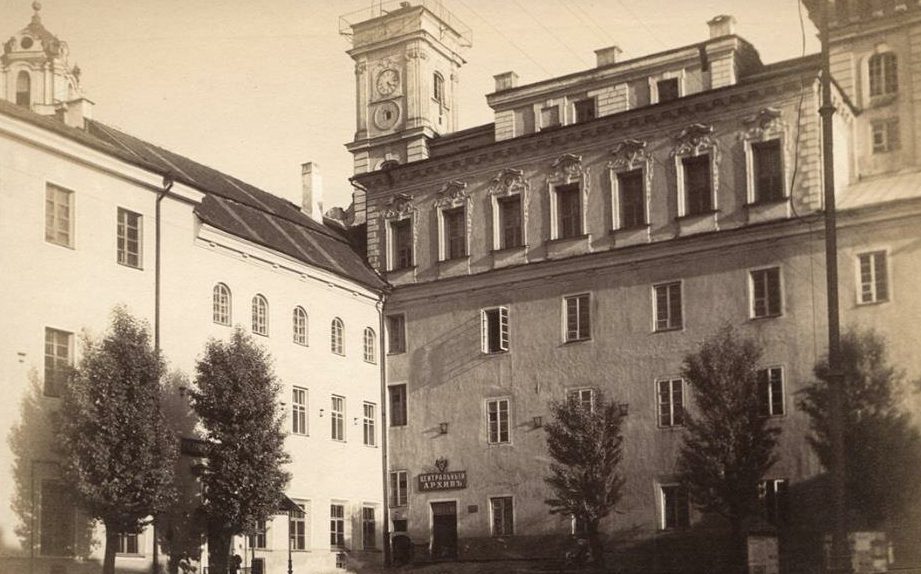
| Pilies Street and the University | 500 | 1870–1872 |
| St Anne's Church | 270 | 1873–1874 |
What changed
Vilna was a city of the Russian Empire until the German army took it in 1915. After the First World War it was fought over by Poland and Lithuania, and from 1920 it was Polish Wilno; in 1939 it was handed to Lithuania, in 1940 it became the capital of the Lithuanian SSR, and in 1990 the capital of independent Lithuania again.
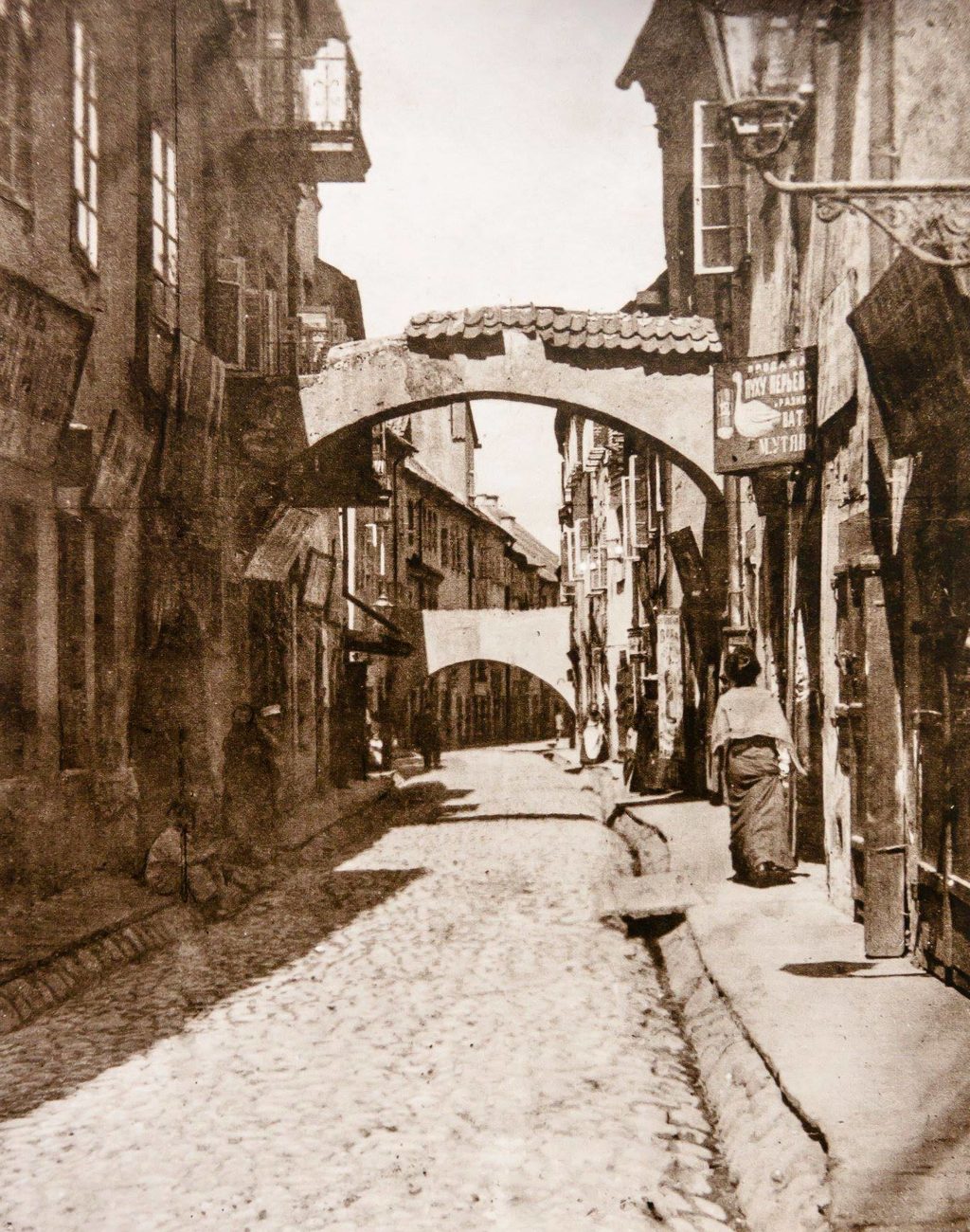
Before the Second World War more than a quarter of the city was Jewish, and Vilna was known as the Jerusalem of Lithuania. In 1941 the German occupiers drove its Jews into two ghettos in the old town and murdered almost all of them; the Great Synagogue, damaged in the war, was pulled down by the Soviet authorities in the 1950s, and the lanes of the old Jewish quarter survive only in part.
Questions about old photos of Vilnius
Where can I see old photos of Vilnius on a map?
On Time Portal: about 4,300 photographs of Vilnius, each pinned where it was taken, most with the direction the camera faced. The map is free in any browser at map.timeportal.app — photographs from 1955 on need no account — and there is an app for iPhone and iPad.
What is the oldest photograph of Vilnius in the archive?
The oldest precisely dated photograph, from 1860, shows a panorama of the city from the Šnipiškės suburb across the river. 171 of the Vilnius photographs were taken before 1900.
Which years of Vilnius are best covered?
The 1970s, with 1,061 photographs, and the 1980s, with 1,011. 62% of the Vilnius photographs date from 1955 or later.
Open Vilnius on the map
Other cities: Moscow, Saint Petersburg, Kyiv, New York, Berlin, Paris, Amsterdam, Nizhny Novgorod, Prague, Yekaterinburg, Kazan, Stockholm, Vyborg, Kaliningrad, Tbilisi, Tashkent, Odesa, Samarkand, Riga, Rome, Minsk, London, Volgograd, Tallinn, Copenhagen, Budapest, Vienna, Helsinki, Warsaw. Or search any address on the map, or in the app.
The counts on this page are free to reuse under CC BY 4.0 — credit Time Portal and link here. The photographs are not ours to license: they belong to their photographers and the archives that keep them.